Advanced vascular care for safe, reliable dialysis access—focused on comfort and better outcomes.


3001 E President George Bush Hwy, Suite 150
Richardson, TX 75082

Dallas Renal Group offers a comprehensive range of outpatient procedures designed to help dialysis patients get the access they need—safely, efficiently, and with minimal disruption. We work closely with your nephrologist to provide personalized access care that aligns with your overall treatment plan.Early detection and timely intervention of access dysfunction is critical. Dysfunction can occur as stenosis (narrowing), thrombosis (clotting), or an aneurysm (bulge in the access).
.webp)
Before we fix anything, we need to see inside your access. We inject a small amount of safe contrast dye through a thin needle, then use a live X-ray camera to watch it flow through your blood vessel. Narrowings, blockages, and clots show up instantly — like a map of what's wrong. In many cases, we spot the problem and correct it in the very same visit, saving you an extra appointment.
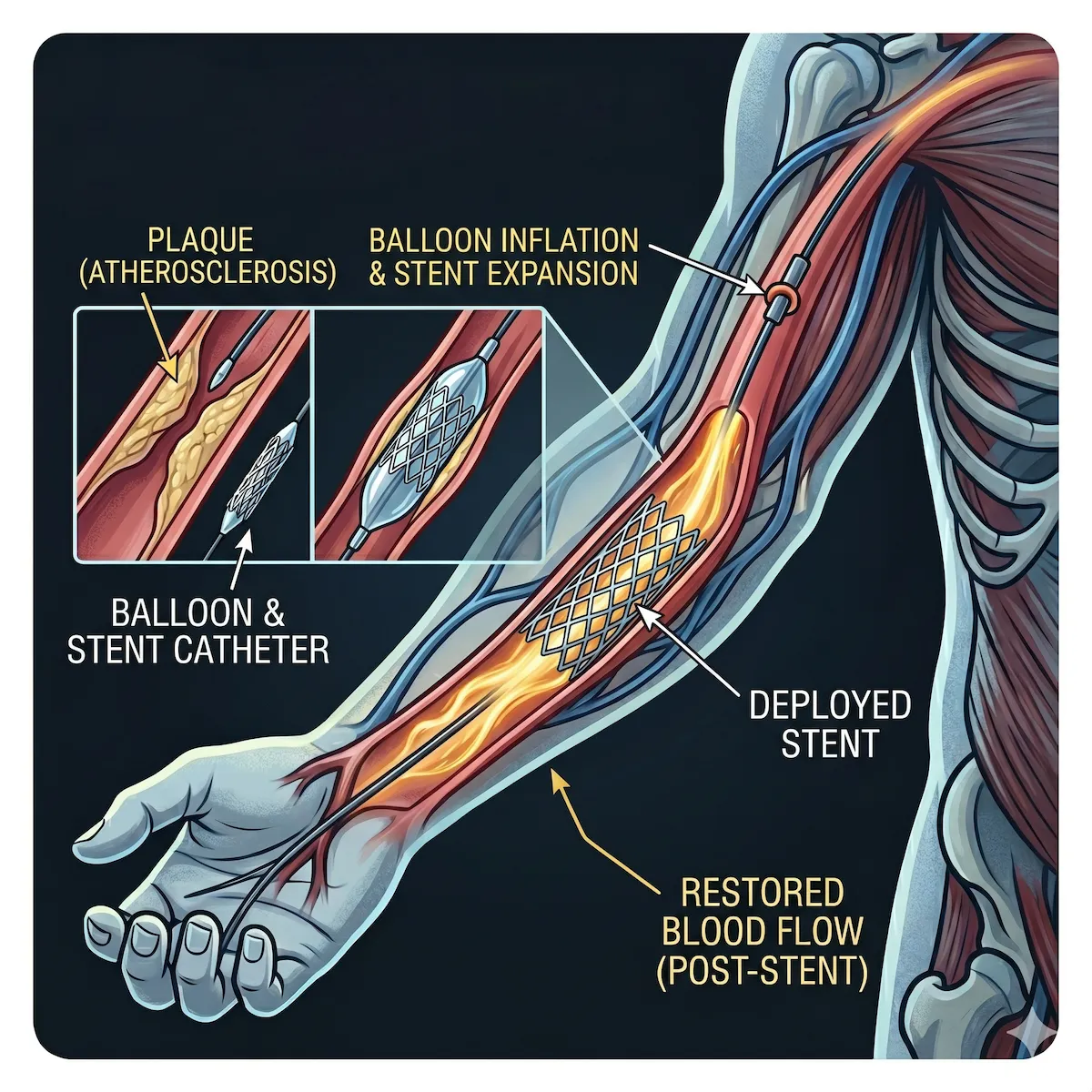
When a narrowing is found during an angiogram, we fix it on the spot. A thin catheter with a tiny balloon at its tip is guided to the problem area and inflated — gently pushing the vessel walls back to their proper size. Where the narrowing tends to return, we place a stent: a small metal mesh scaffold that stays inside permanently, like a scaffold holding a tunnel open. Strong blood flow through your access is restored within minutes.
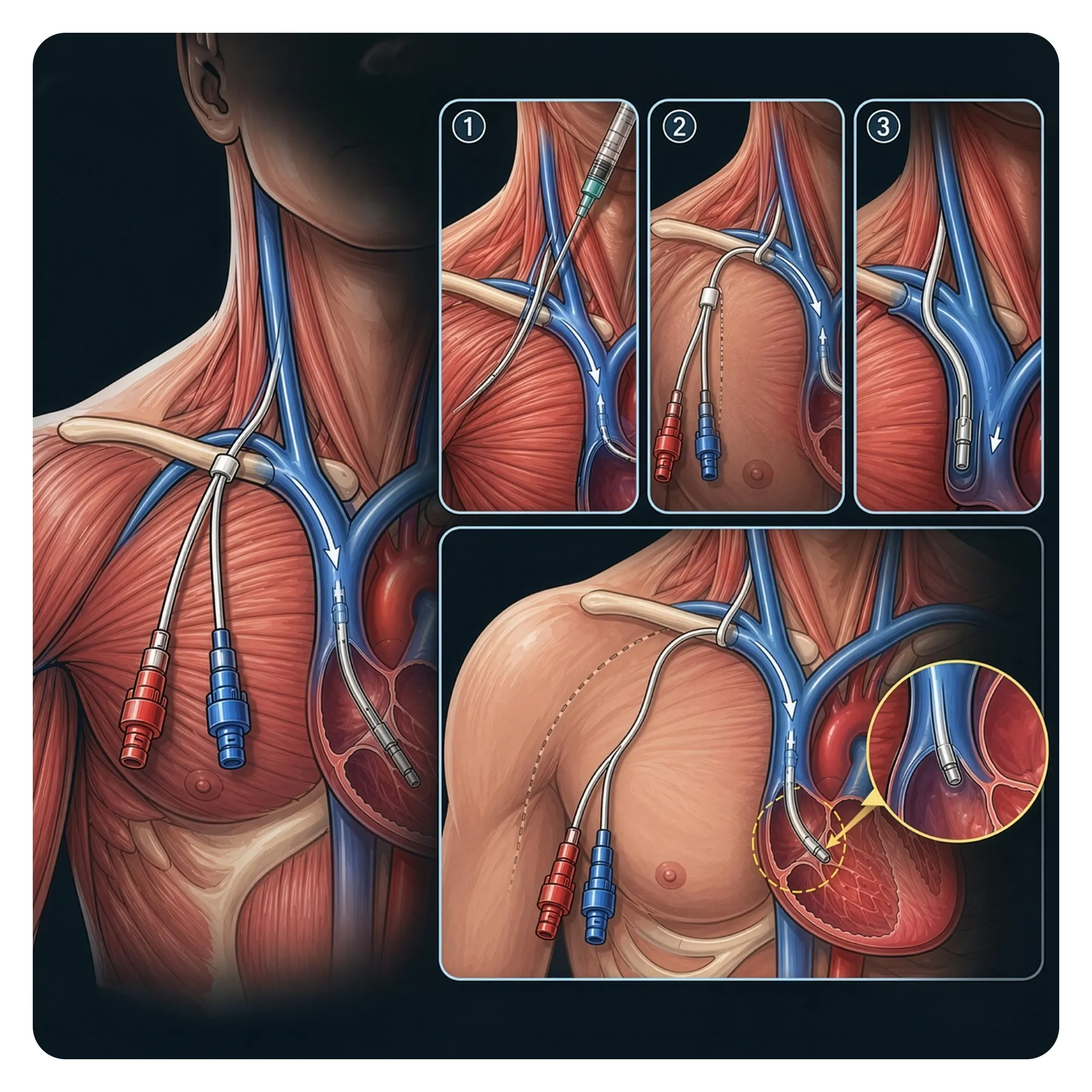
When you need dialysis immediately and a permanent fistula isn't ready yet, a tunneled catheter bridges the gap. A soft, flexible tube is placed into a vein in your neck and secured under the skin with two small cuffs. It has two channels — one carries blood to the dialysis machine, the other returns it clean. When flow decreases over time, we swap in a new one. When your permanent access is ready, we remove it in a quick outpatient visit, leaving no device behind.
%20catheter.webp)
Peritoneal dialysis lets you do dialysis at home, on your own schedule no clinic machine required. A soft catheter is placed into your abdomen through a small incision. Clean fluid flows in through the catheter, sits in your belly for a few hours absorbing waste products from your blood, then drains out. We place, adjust, or remove this catheter as a quick outpatient procedure you go home the same day. Many patients find PD gives them far more freedom than clinic-based dialysis.

Both give doctors reliable, long-term access to your bloodstream for IV medications, nutrition, or blood draws — without repeated needle sticks in your arm. A PICC line is threaded through a vein near your elbow up toward your heart — ideal for weeks to months of treatment. An implanted port is a small dome placed entirely under the skin of your chest — practically invisible, much lower infection risk, and can stay in place for years. Both are placed, exchanged, and removed as a same-day outpatient procedure.
%20%20.webp)
A clotted access is an emergency — no blood flow means no dialysis. We guide a specialized catheter directly to the clot and use a combination of mechanical action and clot-dissolving medication to break it apart and remove it. Most patients dialyze the same day the procedure is done. Acting quickly is critical: treating a clot early usually saves your existing access. Waiting often means starting over with a new one.
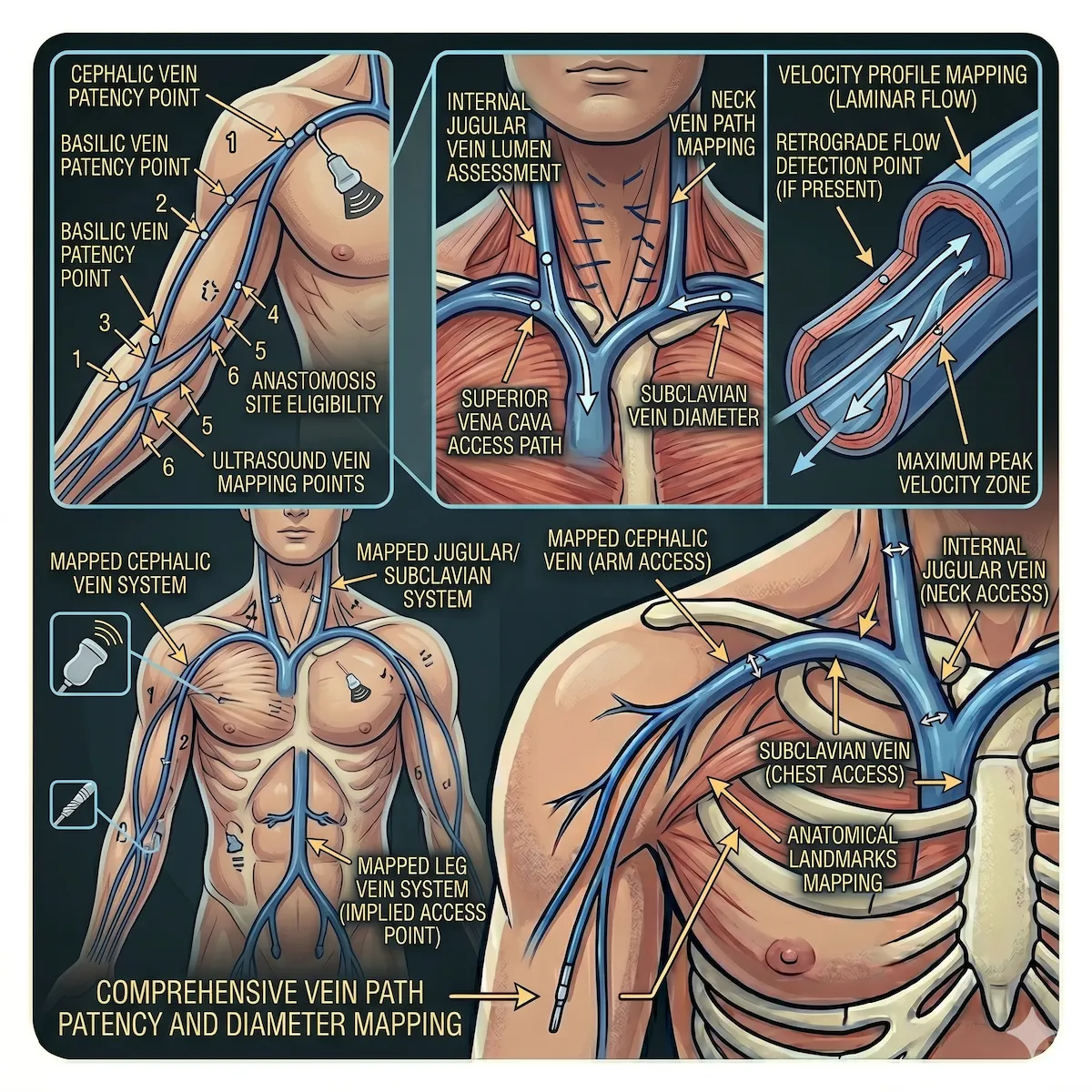
Before creating a fistula, we need to know your veins and arteries from the inside. We press a painless ultrasound probe against your arm and measure each vessel's size, depth, and condition — no needles, no dye, no discomfort. This 30-minute session gives us a precise map so we can choose the best location for your fistula on the first try. Better planning means fewer complications and a fistula that lasts for years instead of months.
.svg)